There is no single price for a custom-made wedding dress, because no two designs use the same fabric, the same amount of lace, or the same amount of work. What we can do is show you exactly what a quote is built from, so you can look at any dress design and make a good guess at where it will land. At A Dress Tailor, custom-made dresses start from $199, and your exact price is confirmed in writing before you pay anything. Here is what moves that number up or down.
The Short Answer: Your Design Decides the Price
A custom-made dress is priced like a recipe, not like a product on a shelf. Change one ingredient — a fuller skirt, a beaded lace instead of a plain one, a longer train — and the cost changes with it. Two dresses that look similar in a photo can be priced quite differently once you look at what they are actually made of. That is why we never quote from a title or a category alone: we quote from your design, your fabric choice, and your measurements.
The five things that drive the price, in the order they usually matter, are fabric, embellishment, silhouette and structure, the fit work, and the finishing details. We will go through each one, then explain how the quote and payment process works, so there are no surprises later.
Driver 1: Fabric Is the Biggest Single Cost
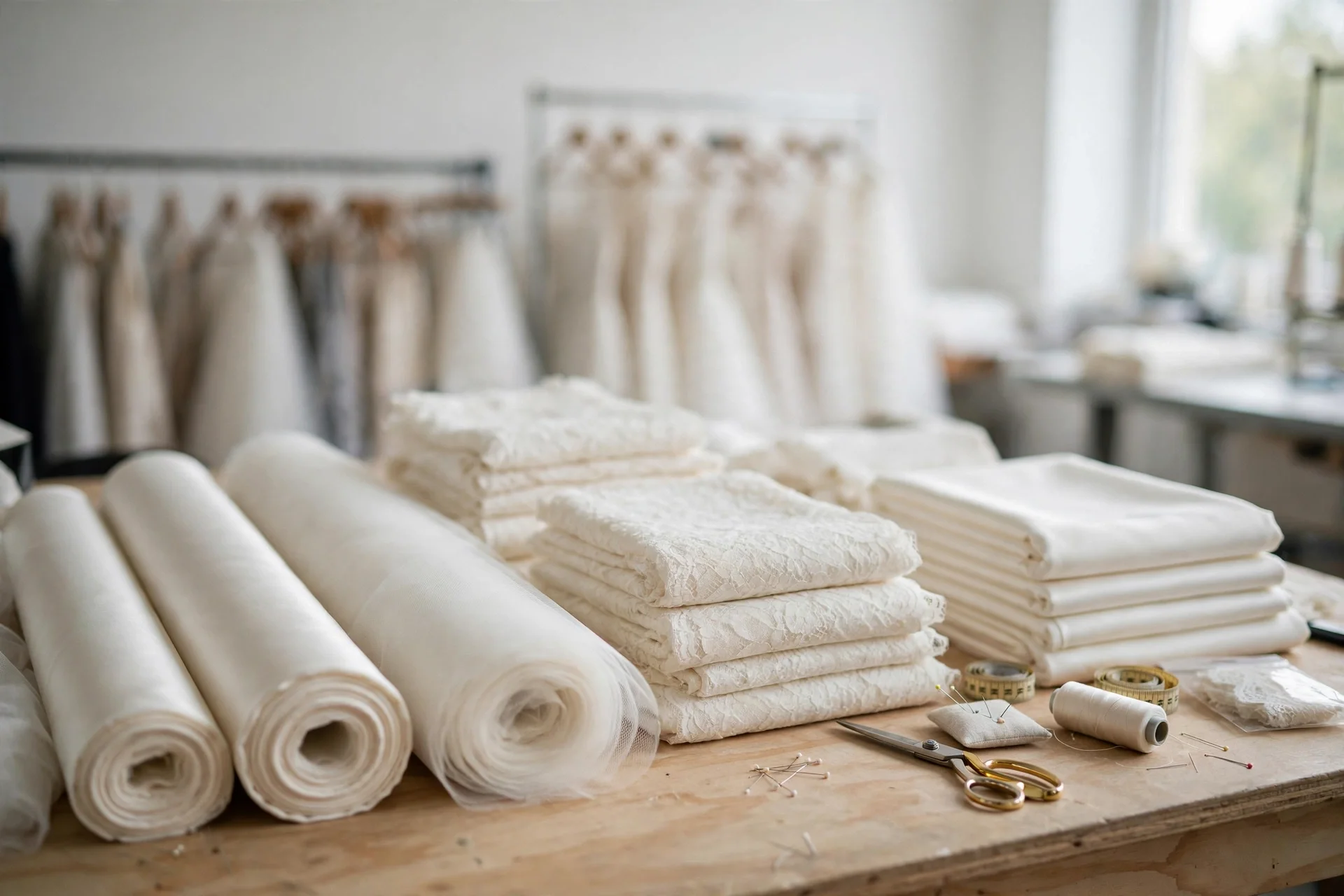
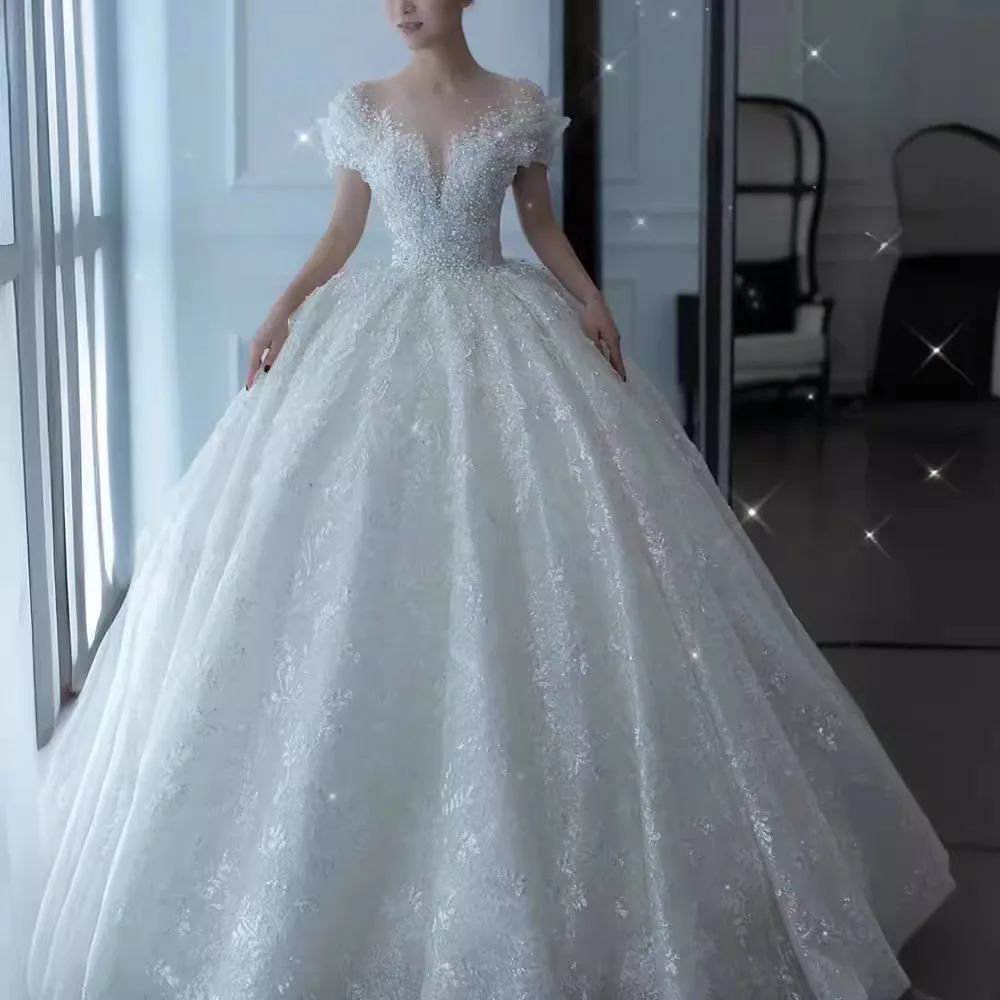
Fabric is normally the largest part of a custom dress quote, because a wedding dress uses far more of it than most people expect. A full ball gown skirt is not one layer of cloth. It is several layers of tulle over a lining, plus the bodice fabric, plus an underskirt that gives the skirt its shape. A slim sheath dress in the same fabric can use less than half the material of a ball gown.
The type of fabric matters as much as the amount. A smooth satin or mikado costs less per metre than a quality embroidered lace, and a dress covered in lace from neckline to hem uses that more expensive fabric everywhere. When you send us a design, one of the first things we confirm is the fabric, because swapping a full lace overlay for lace only on the bodice is one of the easiest ways to bring a quote down without changing how the dress looks from a distance.
Fabric width and pattern matching also play a part. Dress fabrics come in fixed widths, and a design whose pieces fit the width efficiently uses less cloth than one whose wide skirt panels must be cut across two lengths. Lace with a clear pattern repeat needs extra material so the motif can be matched at the seams and centred on the bodice — invisible in the finished dress, but a real part of why two similar-looking lace dresses can be quoted differently.
Driver 2: Lace and Embellishment
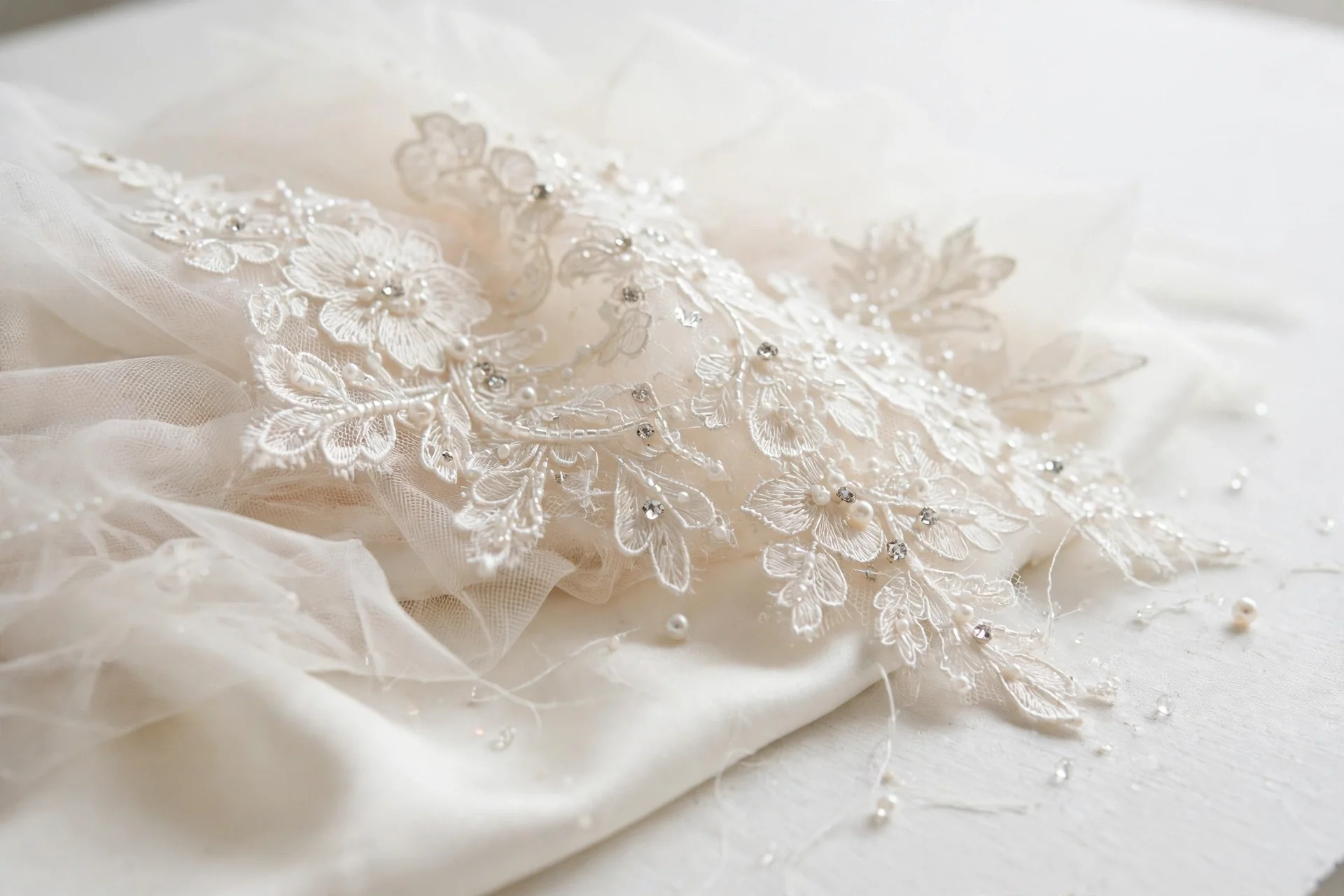
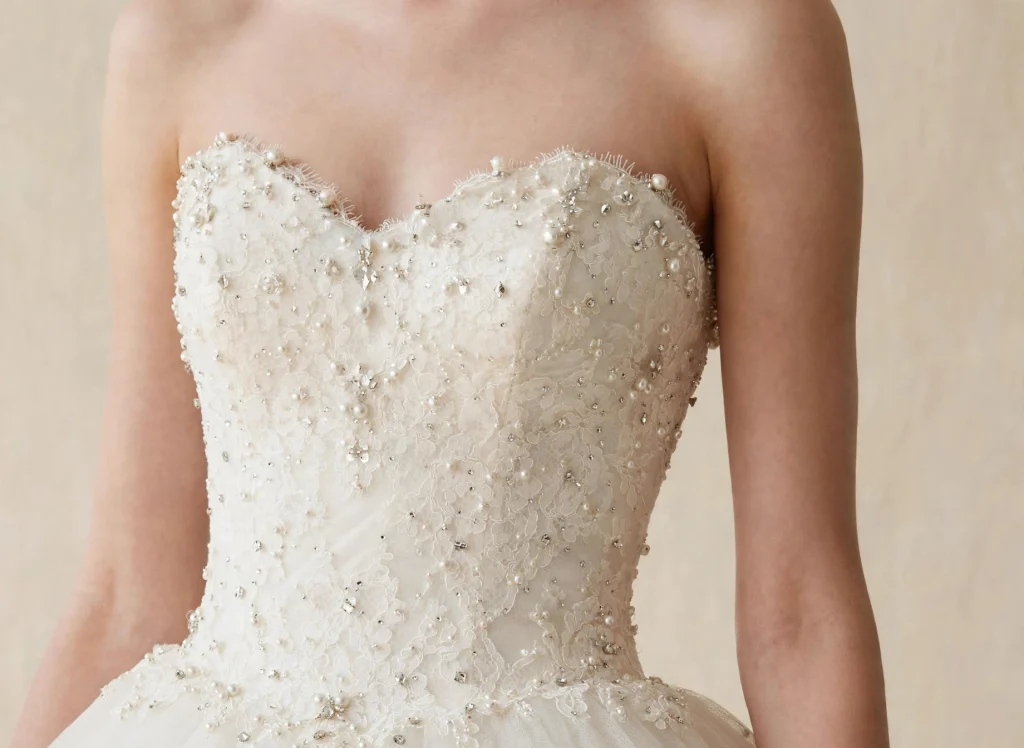
Embellishment is the second big driver, and it is mostly about time. Plain lace appliqué is applied by machine and then finished around the edges. Lace with pearls and crystals woven or sewn into it costs more as a material, and placing it so the pattern sits symmetrically on a bodice, follows a neckline, or fades naturally into a skirt takes careful hand placement before it is secured.
Where the embellishment goes matters too. A bodice-only lace design with a clean tulle or satin skirt is far less work than lace that continues over the whole dress. If you love a heavily embellished design but the quote comes back higher than you planned, the usual adjustment is to keep the detail where it shows most — the bodice and neckline — and simplify the skirt. The dress still reads as the same design in photos, at a noticeably lower cost.
Driver 3: Silhouette and the Structure Inside
What you cannot see in a photo still costs money, because it is what makes the dress hold its shape on your body. A structured bodice contains boning, cups, and one or more lining layers, each cut and sewn separately. A ball gown needs an underskirt structure to hold the skirt out. A mermaid dress needs precise seaming and enough structure through the hips to keep its line smooth.
Trains add cost in two ways: more fabric, and more finishing work along a much longer hem. A sweep train is a small addition. A long chapel or cathedral train is a significant amount of extra material and edging. None of this is padding in the quote — it is simply the difference between a dress that photographs well standing still and one that still looks right after hours of wearing, sitting, and dancing.
Driver 4: Made-to-Measure Fit Work
A custom-made dress is not a standard size pulled from a rail. Your pattern is prepared and checked against your own measurements — bust, waist, hips, hollow to hem, and the other points we ask you to send. That measuring and pattern work is part of what you are paying for, and it is also why a made-to-measure dress usually needs far fewer alterations afterwards than an off-the-rack dress in a standard size.
This is one area where you can genuinely help keep the cost where it should be. Accurate measurements, taken the way our guide describes, mean the pattern is right the first time. If you have not taken yours yet, start with our guide on how to take your measurements for a custom dress at home — it takes about fifteen minutes with a soft tape and a second pair of hands.
Driver 5: Details, Changes, and Timing
The smaller decisions add up at the end of a quote. Sleeves add fabric and fitting work, especially lace sleeves that have to match the bodice pattern at the shoulder. A change of neckline, an added overskirt, detachable elements, or a matching veil all add pieces to the order. Each one is quoted as part of your design before we start, so you can drop or keep details with the price in front of you.
Timing works differently than most people expect. Our making time is 3–6 weeks once your order starts, and that does not change with the design’s complexity in the way the price does. What timing does affect is choice: ordering early means the full range of fabrics is available for your design, while a late order may mean choosing between the fabrics that can be prepared in time. If your date is fixed, our timeline guide explains how long a custom-made dress takes from first message to delivery.
How to Read a Custom Dress Quote
A clear quote names its parts. It should tell you the fabric type, and where the lace is used — bodice only, or throughout the dress. It should describe the structure inside the silhouette, state the train length, and set out the fit work to your own measurements. Shipping should appear as a separate line with an explanation of how it is calculated, by destination and by the parcel’s weight and size. If a line simply says “dress” with one figure and no fabric named, you do not yet have a quote you can compare with anyone else’s.
Before paying any deposit, ask a few direct questions. Is this figure fixed unless I change the design? What exactly is included, and what counts as extra? When is the balance due, and what will I see before I pay it? Be cautious of a price that can only be explained after you have paid, of pressure to skip written confirmation, or of a quote far below others with no fabric named. A maker who prices the way this article describes should be able to walk you through your figure line by line, before you commit to anything.
How Your Quote and Payment Work
The process is deliberately simple, and the price is fixed before any money moves. You send us your design — photos, a link to a style in our wedding dresses collection, or your own sketch — together with the fabric and details you want. We confirm the design, the fabric, and your measurements with you, and give you a final quote for the dress. Shipping is calculated separately by destination and weight, and you can estimate it yourself on our shipping page before you order.
When you are happy with the quote, we send a PayPal invoice for a 50% deposit, and making starts once it is paid. Making takes 3–6 weeks. When your dress is finished, we send you photos of the actual dress for your approval — only after you confirm them do you pay the balance, and then your dress is shipped to you with tracking. If a detail in the finished photos is not what was agreed, tell us before paying the balance; that checkpoint exists so you are never paying in full for a dress you have not seen.
Frequently Asked Questions
Why can’t you give me an exact price before I send my design?
Because the price is built from your fabric, embellishment, silhouette, and measurements, and those are only fixed once we see the design. A starting price — ours is from $199 for a custom-made dress — tells you the floor, but quoting an exact figure without the design would mean guessing, and the guess would have to change later. We would rather confirm one accurate quote before your deposit than adjust it afterwards.
Does a ball gown always cost more than a sheath dress?
In the same fabric, almost always yes. A ball gown uses several layers of skirt fabric, an underskirt structure, and a much longer hem to finish, while a sheath uses far less material and simpler construction. The exception is embellishment: a plain ball gown can cost less than a sheath covered from shoulder to hem in beaded lace, because the lace and the time to place it outweigh the fabric difference.
Can I lower my quote by changing the fabric?
Yes, fabric is the easiest place to adjust. Keeping lace on the bodice and using tulle or satin for the skirt, choosing a plainer satin instead of an embroidered one, or shortening a train all reduce the quote without changing the overall design. Tell us your budget when you send the design and we will suggest which changes bring the price down while keeping the look closest to your reference.
When exactly is my final price confirmed?
Before you pay anything. We confirm the design, fabric, and measurements with you first, then issue the final quote for the dress, with shipping calculated by your destination and the parcel’s weight and size. The 50% deposit is only invoiced after you accept that quote, and the balance is due only after you approve the photos of your finished dress.
Does the dress price include shipping?
No, shipping is calculated separately, because it depends on where you live and on the finished parcel’s weight and dimensions — a full ball gown packs very differently from a sheath dress. Your quote shows the shipping figure before you commit, and our shipping page has a calculator where you can check the estimate for your country in advance, including how volumetric weight works.
Related Articles
Made to Measure vs Off-the-Rack: What Is the Difference, and Which Should You Choose?
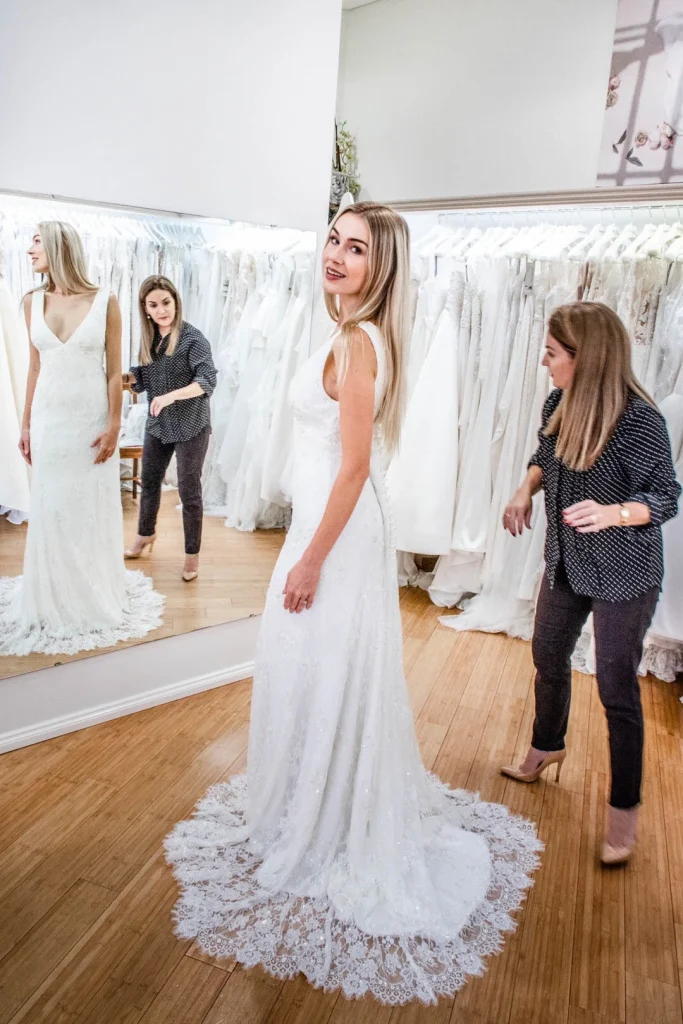
Off-the-rack dresses are cut to a standard size chart; made-to-measure dresses are cut to your own measurements. Here is how fit, design choice, timing and alterations really compare, and a simple way to decide which one suits you.
Ordering a Dress From a Photo: What to Send and What Happens Next
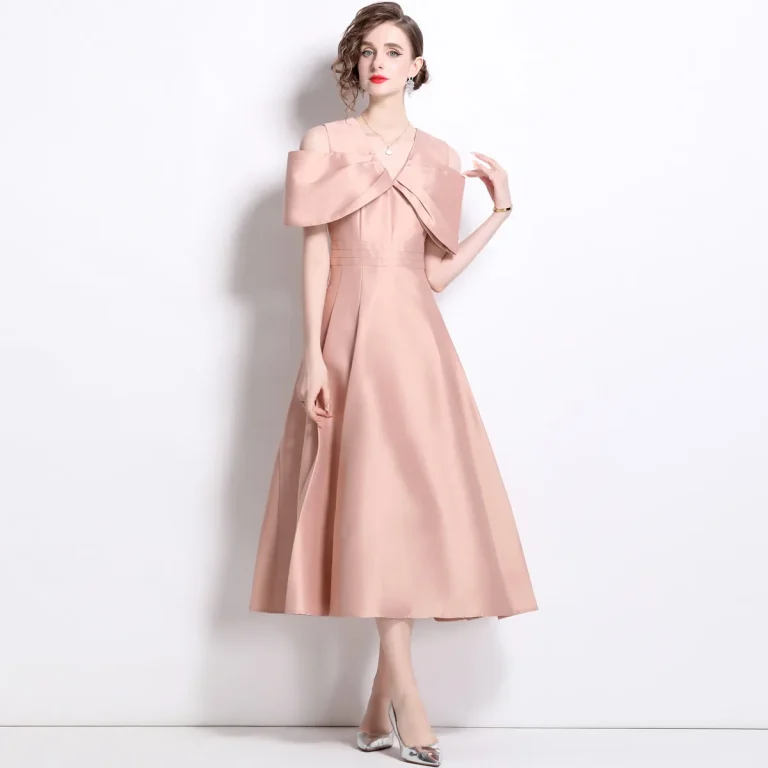
A clear set of photos and a few honest details is all it takes to start a custom dress. Many of our favourite orders began as a screenshot: a gown you loved, a neckline you cannot find in your size. This guide explains what to send for the most accurate first quote.
How Long Does a Custom-Made Dress Take? From First Message to Delivery
From your first message to a finished dress at your door, a custom-made order moves through clear stages — and the making itself typically takes 3–6 weeks. This guide breaks down each stage, from quote and deposit to final delivery, so you can plan backwards from your event date.
How to Take Your Measurements for a Custom Dress at Home
Accurate measurements are the single biggest reason a made-to-measure dress fits well. You do not need a tailor or any special equipment: a soft measuring tape, thin clothing and about fifteen quiet minutes at home are enough. This guide walks through every measurement we ask for.